
The Legacy of Chief Mrs. Elizabeth Njideaka: A Pioneer in Education

 The Legacy of Chief Mrs. Elizabeth Njideaka: A Pioneer in Education


By Emeka Esogbue
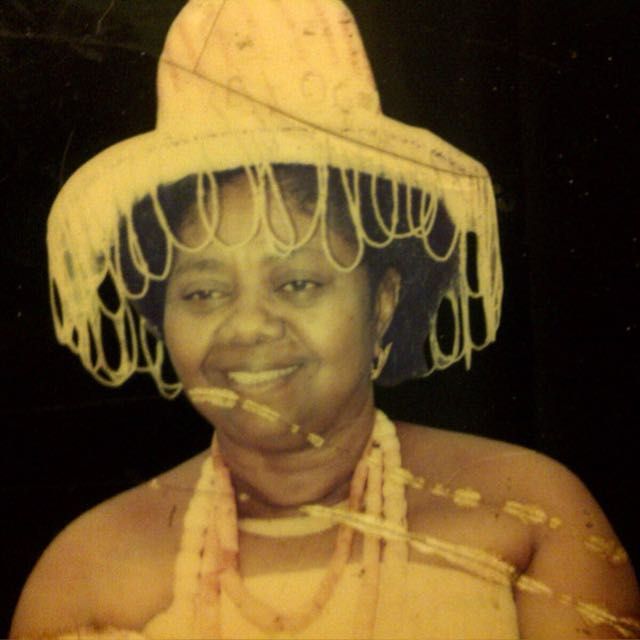


In the heart of Ibusa, a community in Delta State, Nigeria, a legendary figure emerged, leaving an indelible mark on the lives of countless individuals especially the youngsters. Chief Mrs. Elizabeth Njideaka, a path-breaking educator, philanthropist, and community leader, is remembered for her tireless efforts to uplift the Nigerian child and empower her community.


Born on June 28, 1939, to Mr. and Mrs. Ejoh, Elizabeth Nneka Njideaka was one of the first educated elites from Ibusa who not only pursued her dreams but ensured the educational training of many. She pursued her passion for education, earning a T.C. II and Associate Degree in Education from the University of Lagos. Her academic journey continued at the Rochester Institute of Technology (RIT) in New York, USA, where she obtained a certificate in Clinical Supervision.


In January 1970, Chief Mrs. Njideaka founded the Santa Maria School in Surulere, Lagos, with a mission to contribute to the educational upliftment of the Nigerian child. The school grew from a nursery to a primary school, with branches emerging across Lagos. Santa Maria, Ibusa, established in 1978, became a beacon of excellence, molding students to become educationally and morally fitting members of society.


Chief Mrs. Njideaka's impact extended beyond education. She was one of the most educated Anioma women of the era, one of the most respected Ibusa women and one of the most reliable in terms of community development. She was a mother to all, charitably giving to the community and beyond, and earned the title of Yeye Oge of Mushin for touching the lives of the people. Her home was a haven for those seeking assistance, and her Santa Maria Schools provided scholarships to many students. She led the Ibusa Community Development Union (ICDU) Women's Wing for eight years, the Umuekea Women for ten years, and founded the Nneka Social Club. She was also the Patroness of Otu Ife Onye Lolu Nwanmadu Dancing Group of Ibusa, which musically spread the dance culture of the Enuani people of Anioma.


Chief Mrs. Elizabeth Njideaka's legacy is an attestation of selflessness, dedication, and passion for education and community development from which many from the community especially, should emulate. Santa Maria School in Ibusa, still functioning till date educationally, enjoys a heritage status because it showcases to visitors the beginning of private education in the community. There lies the pride of the current students of the school. It is indeed a landmark of educational excellence and significance.


Though she passed away in 1990, her impact remains unforgettable. As the "Mother of Today's Educators," her story serves as an inspiration to future generations, reminding them of the power of education, philanthropy, and community leadership. Chief Mrs. Elizabeth Nneka Njideaka was buried in Ibusa, her hometown.

Comments

Popular posts from this blog

A SHORT HISTORY OF OBOLLO CLAN IN ENUGU STATE, NIGERIA

A SHORT HISTORY OF OBOLLO CLAN IN ENUGU STATE, NIGERIA By Emeka Esogbue Introduction Not many historical literatures on the Obollo people exist for the usual reasons associated with our people who prefer to write the history of mighty and populous peoples already enriched with volumes of historical accounts and records. Thus while there are historical documents on other peoples of Igbo, for Obollo, it is the story of dearth of documents. However, it is within my historical concern that the rich history of this part of Igboland be adequately researched into, documented and preserved for the future generation. I do not hail from this part of Igboland but my historical background, interest and curiosity propelled me towards the acquisition of both oral and written information to put this material together. Geography The various Obollo communities comprising of Obollo Afor, Obollo Etiti, Obollo Eke, Obollo Orie and Obollo Nkwo are strategically situated at the regional bou...

Top Seven Ancient Powerful Societies that Shaped Nigeria’s History

 Top Seven Ancient Powerful Societies that Shaped Nigeria’s History Compiled By Emeka Esogbue There were several ancient societies that shaped today’s Nigerian history. Here are the top most powerful ancient societies in what became Nigeria: 1. Kanem-Bornu Empire – Located in present-day Chad, Nigeria, Cameroun and Libya, the Kanem-Bornu Empire was one of the most powerful kingdoms in Africa and perhaps, Nigeria’s most powerful and influential kingdom. The Empire was founded by the Kanuri people, a Saharan ethnic group. It had two capitals located in Kanem and Borno. At its peak, it controlled trade routes and built impressive cities. The Kanem-Bornu Empire was known for its powerful military with which it expanded and also protected its trade interest, an extensive trade networks it had already built.  2. Benin Empire – This is one of the most powerful and influential ancient societies in Africa. At its peak, it extended to Lagos and parts of Ondo State and also covering almo...

Umuezechime in Anioma: History and Identity Factor Resolved By Emeka Esogbue

Umuezechime in Anioma: History and Identity Factor Resolved By Emeka Esogbue Introduction Although the Anioma peopling the West Bank of the Niger River Basin have often been categorized as a people that wholesomely trace their origin to only one particular ethnic group of Nigeria by writers of history and other researchers from outside the Anioma region, numerous historical evidences drawn from the oral and written sources, and migration theories of the people confirm their heterogeneous origins. Evidently, all the peoples that now comprise the “Anioma” area originated from different ethnic groups of the Nigerian nation.   The above is confirmed by Osia (2012:6) who wrote: “History notes that the Anioma people trace their origins to various communities within Nigeria: Edo, Igala, Yoruba and Igbo. No history has proved these ancestries otherwise…” Esogbue (2015:14) further admitted that: “there is always tendency for researchers to an extent to assign the whole of...